
Homeowner guide · Northwest Florida
What we check on the outside of your home
Most water damage inside a house starts outside it. This is the walk-around our crews do on a home's roof, edges, siding and deck, with photos from a real inspection.
Updated Feb 22, 10:38 AM
When water shows up inside a house, the cause is often on the outside: a roof screw that's worked loose, a gutter that overflows, soil piled against the siding. Before we dry a single room, we walk the outside of the home. Here's what we look at, so you can do a quick check of your own.
1. The roof surface
On a metal roof we check the screws (they back out over time, and the rubber washers crack in the sun), the laps and seams between panels, and any worn or rusted spots. On shingles we look for lifted, cracked or missing tabs and bare spots.
2. The edges: drip edge, fascia and gutters
Water should leave the roof, drip clear of the wall and be carried away. We look for gaps at the drip edge, soft or stained fascia boards, gutters that are clogged or too small, and downspouts that are crushed or empty right next to the foundation.
3. Soffits and vents
Openings under the roof overhang let wind-driven rain, and animals, into the attic. Missing or damaged soffit panels are a quick fix that keeps a storm from becoming a ceiling stain.
4. Siding, windows and doors
Staining, peeling paint or swollen trim on siding shows where water is running or splashing back. Around windows and doors we look at caulk, flashing and the sill: wind-driven rain gets in where those fail.
5. Where the house meets the ground
Siding should stop a few inches above the soil. When mulch, pine straw or dirt is piled against it, water wicks straight into the wall. The ground, patios and walkways should slope away from the house, not toward it.
6. Decks and patios
Decks and patios built tight against the house should drain away from it and sit below the door threshold. Wet, mildewed boards along the wall are a sign water is collecting there.
Do your own walk-around
- After a heavy rain, watch where the water goes: off the roof, into the gutters, away from the walls?
- Look up at the soffits and roof edges for gaps or stains.
- Check the bottom of your siding for soil, mulch or staining.
- Look at the deck or patio next to your doors: does water pool there?
If you find something, or there's a musty smell, soft flooring or a stain inside, send us a photo or call. We'll check the outside and the inside, with a moisture meter, before it turns into a bigger repair.
From a real inspection
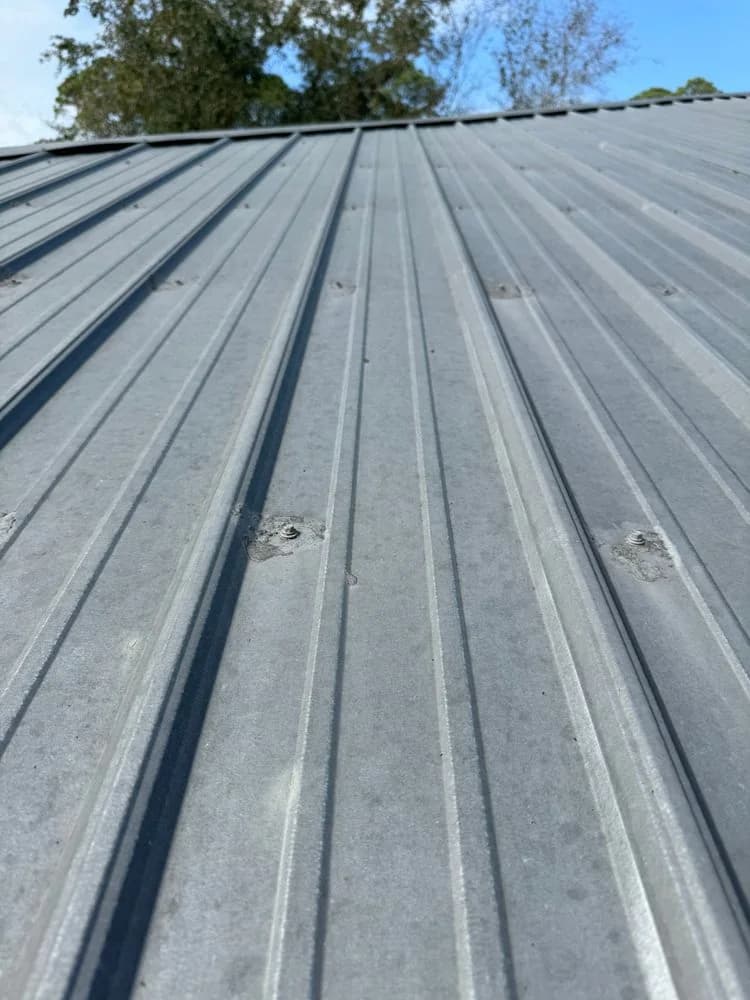
Metal roof screws: we look for any backing out or with a cracked rubber washer. 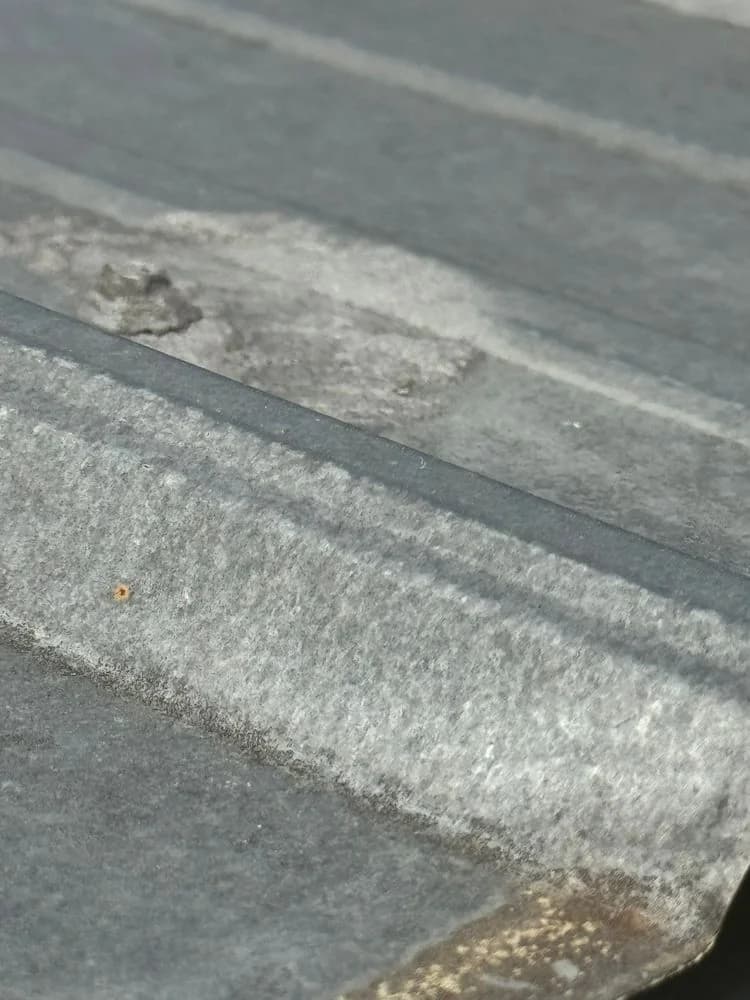
Panel surfaces and laps: wear, rust or lifted seams let water under the metal. 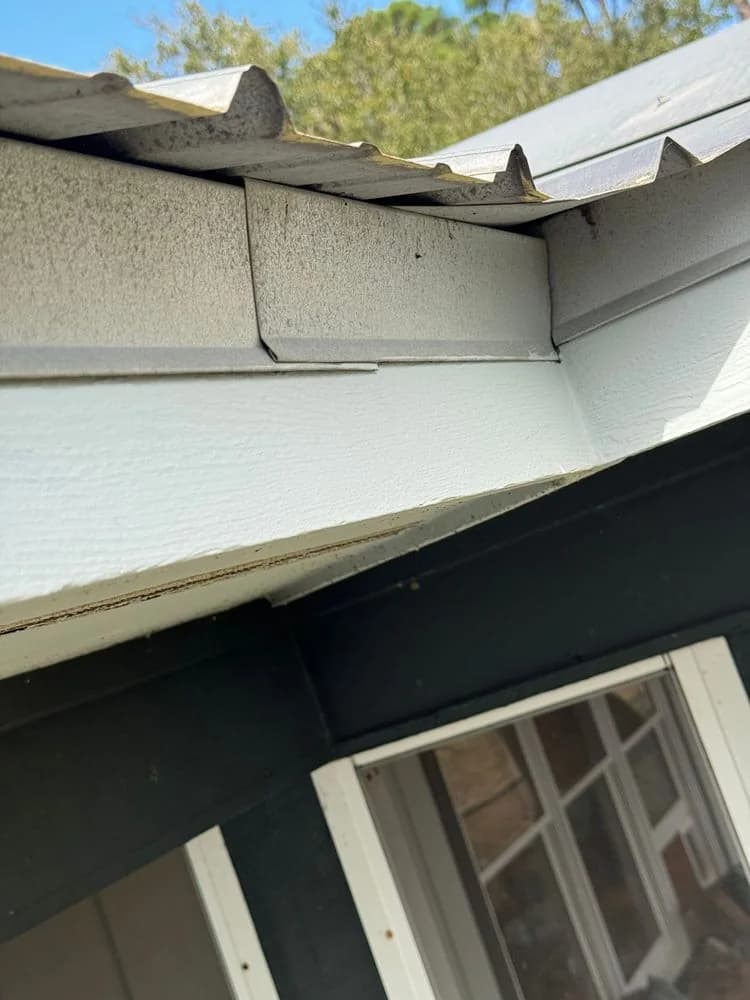
Roof edges and fascia, where water should drip clear of the wall. 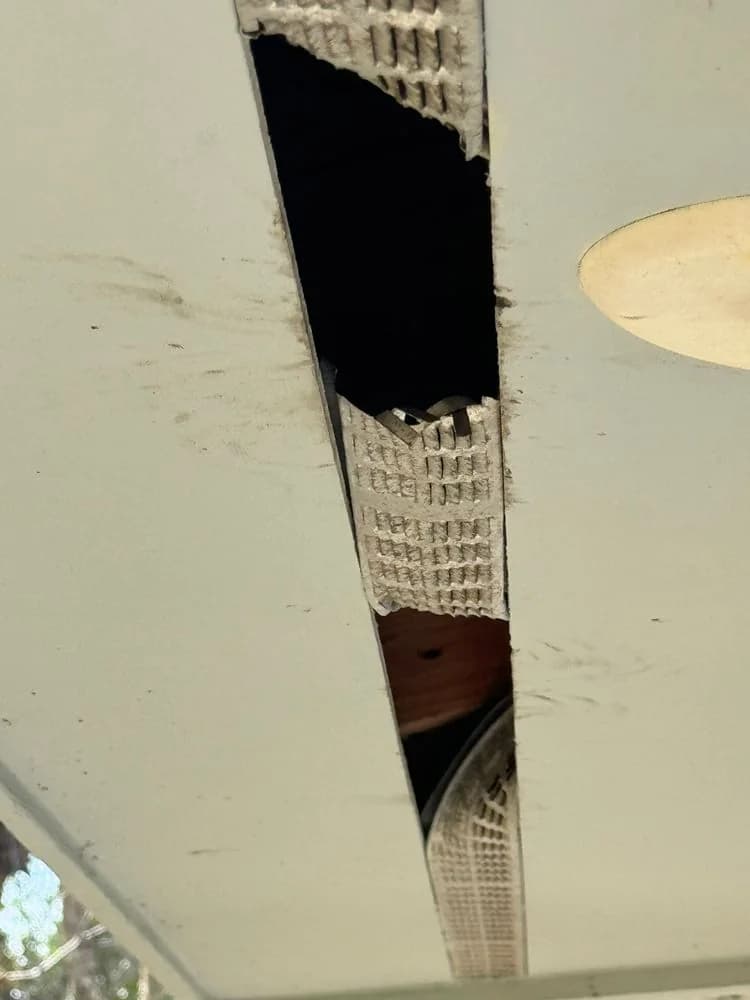
Soffits: openings let wind-driven rain and pests into the attic. 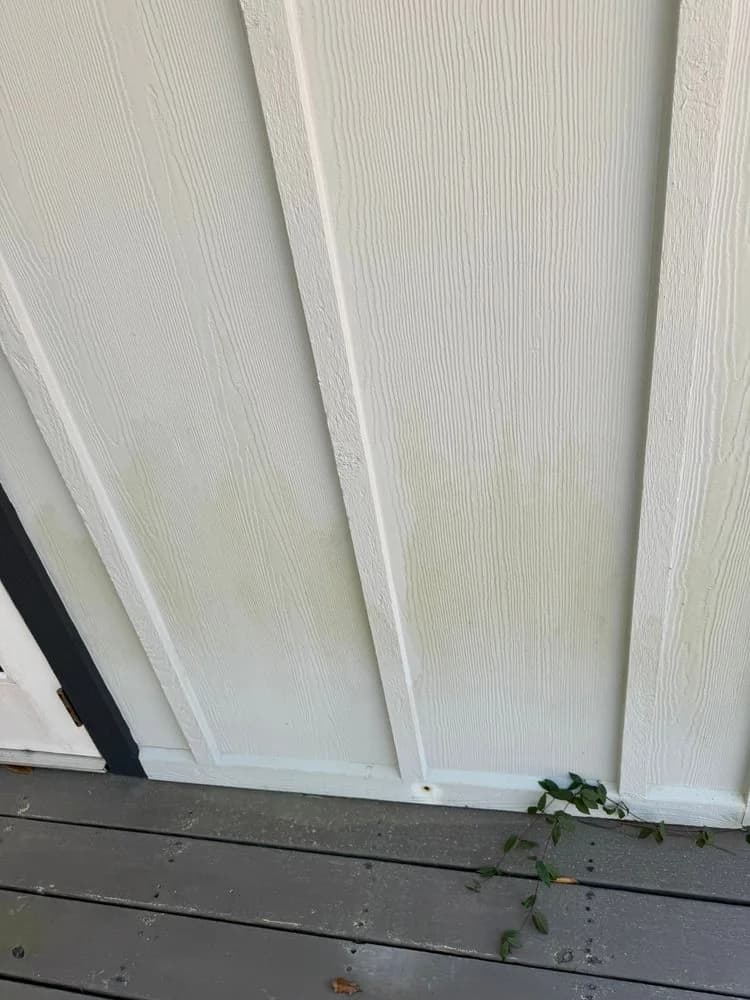
Staining on siding shows where water runs or splashes back. 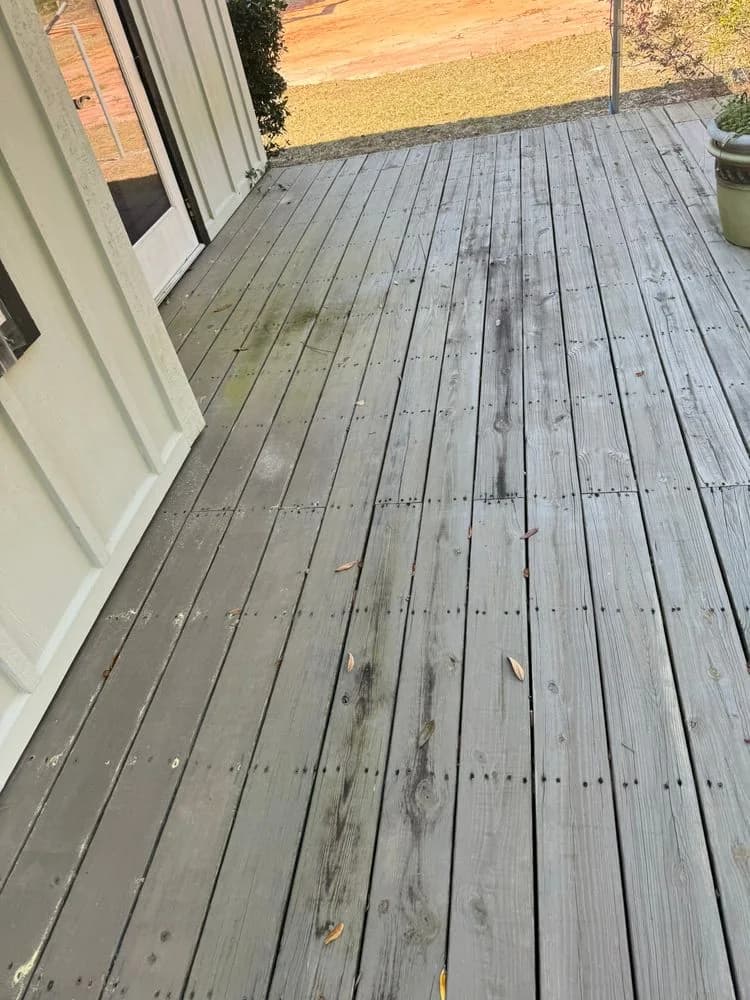
Deck boards next to the wall: water should drain away, not toward the house. 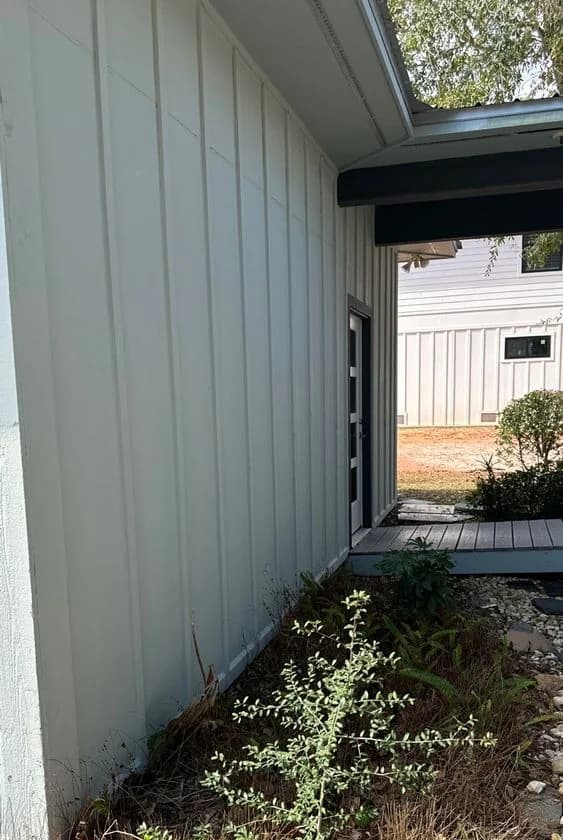
Where siding meets the ground: we want a gap, not soil and plants against it.