
Project story · Water · Storm · Santa Rosa Beach, FL
Hurricane Isaias: six ways water got into one home
After Hurricane Isaias, a home smelled wet and the walls and floors by the patio doors were soaked. Water was getting in at ground level, and we traced six reasons why.
Updated Oct 15, 5:23 PM · Hurricane Isaias (2026)
- Assess
- Mitigate
- Dry
- Rebuild
- All clear
- Highest drywall moisture reading
- 34%
- Ways water was getting in
- 6
- Siding buried below the soil
- 3 in
- Rooms with wet walls and floors
- 2
After Hurricane Isaias, the homeowners noticed the house smelled wet, and water had come in around the living room patio doors. When we inspected on October 15, the drywall and flooring were wet in both the living room and the master bedroom, with drywall readings up to 34%.
It wasn't one leak. Water was getting in at ground level, from six things adding up.
The six ways water got in
- The landscaping slopes toward the house. Runoff was being pushed back onto the paver deck instead of away from the home.
- The gutters are too small for the roof. In a hard rain, water from the long roof shoots right past them and lands on the pavers.
- A downspout was crushed by storm debris. Water backed up and leaked at the fittings, and the corner of the building is rotting.
- Pine straw and beds against the walls hold water right where the walls meet the ground.
- The siding runs into the soil. On the back patio it extends past the walking surface and about 3 inches into the dirt, so when groundwater rises in heavy rain, it soaks straight into the wall.
- The paver deck is almost level with the door threshold and doesn't slope away from the patio doors, so water pools against them.
For comparison, a neighboring unit has its foundation raised above its concrete patio, the way it should be. Height and slope matter.
What we recommended
- Cut out the wet drywall and remove the wet flooring: they were soaked with groundwater, not clean rainwater.
- Dry out the structure, checking with a meter until it reads dry.
- Find and seal every path water is using to get in.
Drying alone won't fix it. Unless the gutters, downspouts, grading and patio height are corrected, the next hard rain brings the water back.
Check your own home after a storm
- Do your gutters overflow in a hard rain, or does water sheet off the roof past them?
- Are your downspouts clear, and do they carry water away from the house?
- Does the ground, the patio or the mulch slope toward your walls?
- Can you see a few inches of foundation below the siding, or does the siding disappear into the dirt?
- Is your patio or deck nearly level with the door threshold?
A musty smell after a storm, swollen baseboards or soft flooring near a door are signs water got in. Send us a photo or call, and we'll check it with a meter before mold has a chance to start.
From the job file
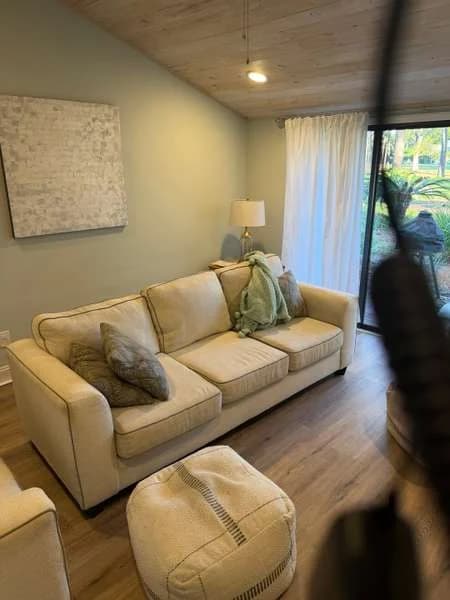
The living room. Water came in around the patio doors on the right. 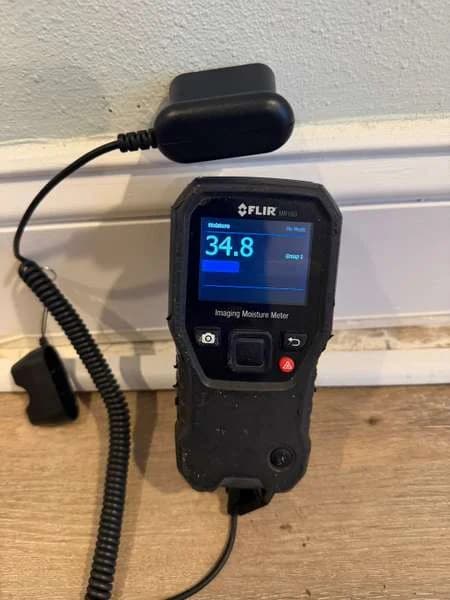
Drywall readings ran from 19% to 34% in the living room and master bedroom. 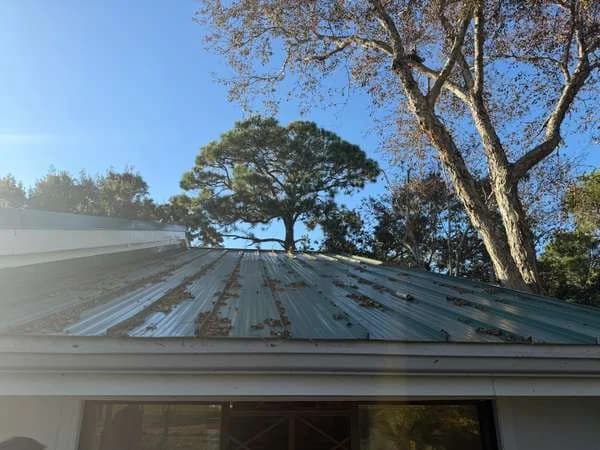
The long roof sheds water straight past the undersized gutters onto the pavers. 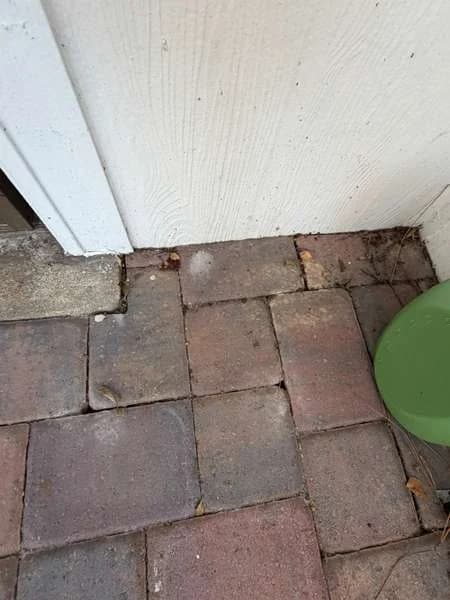
The paver deck sits almost level with the door threshold, and the siding runs below the walking surface. 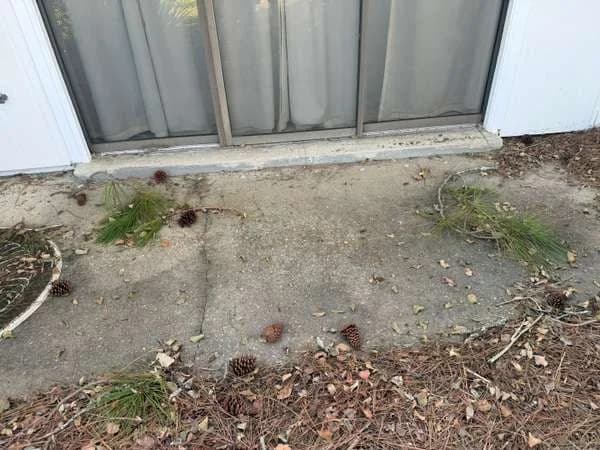
The patio comes right up to the door: water has nowhere to go but in. 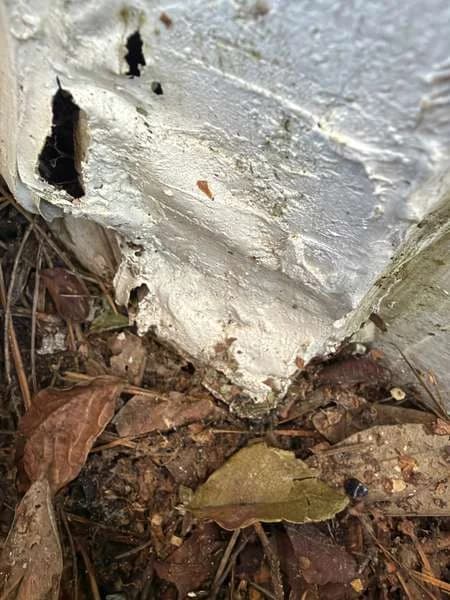
A crushed downspout was backing up at this corner, and the wood is rotting. 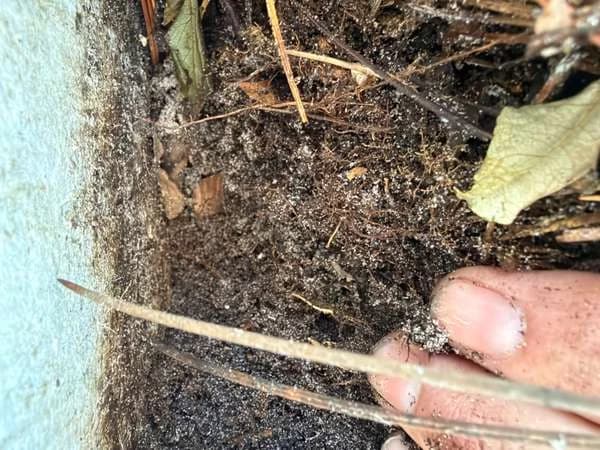
Siding buried about 3 inches into the dirt. The wall inside is wet at this spot.