Project story · Mold · Restoration · PCB, FL
Lab Tests Found Heavy Mold in a Panama City Beach Condo's Ductwork
We were asked to check a Panama City Beach condo's heating and air ducts for mold. Two swab samples came back with very high spore counts. This was an assessment only, and it ended with a clear plan for what comes next.
Updated Oct 16, 8:48 AM
- Spores per swab, HVAC plenum
- ~2,900,000
- Spores per swab, kitchen duct
- ~3,200,000
- Surface count often seen as heavy contamination
- 1,000,000
- Swab samples sent to the lab
- 2
Why we were called
We were asked to check a condo in Panama City Beach for possible mold in its heating and air conditioning ducts.
This visit was an assessment only. We looked over the system, took samples and sent them to a lab. The record doesn't include any cleanup work, so this story covers what we found and what we recommended.
What we found
With the grilles off, we could see dark growth around the vent openings, on the back of the grilles and along the tape seams. Inside, the ducts were made of ductboard, and the surface looked dusty and stained.
The ceiling also had water stains. Our report notes that the unit above had flooded.
What the lab said
We took two surface swabs, one from the HVAC plenum and one from a kitchen duct. An accredited lab counted the spores.
The plenum sample came back at about 2,900,000 spores per swab. The kitchen duct sample came back at about 3,200,000. Nearly all of it was Cladosporium, a common outdoor mold that can grow indoors when there's moisture.
Swab results have no official limits. But labs often treat surface counts over 1,000,000 spores as a sign of heavy contamination, and both samples were well past that. The lab found no Stachybotrys (often called black mold) and no Chaetomium.
Here's why mold in ducts matters: when the system runs, it can blow spores into the rooms you live in.
What we recommended
Ductboard has several layers, and it can't be cleaned to a standard anyone can verify. So we recommended replacing all of the ductwork instead of trying to clean it.
Because air had been moving through the moldy ducts, we advised treating the whole unit as affected. That means HEPA vacuuming and an antimicrobial wipe-down of the walls, ceilings, floors and fixtures, plus removing any wet drywall or insulation from the flooding upstairs.
Before any new ducts or drywall go in, the unit should pass a clearance test, and the moisture source should be found and fixed.
If this happens at your home
Dark specks on your vent grilles, or water stains on the ceiling near them, are worth a closer look. A simple swab test shows what's growing and how much.
If you have ductboard, ask whether cleaning is really an option. Fixing the moisture comes first, and testing again before you close things up is how you know it worked.
From the job file
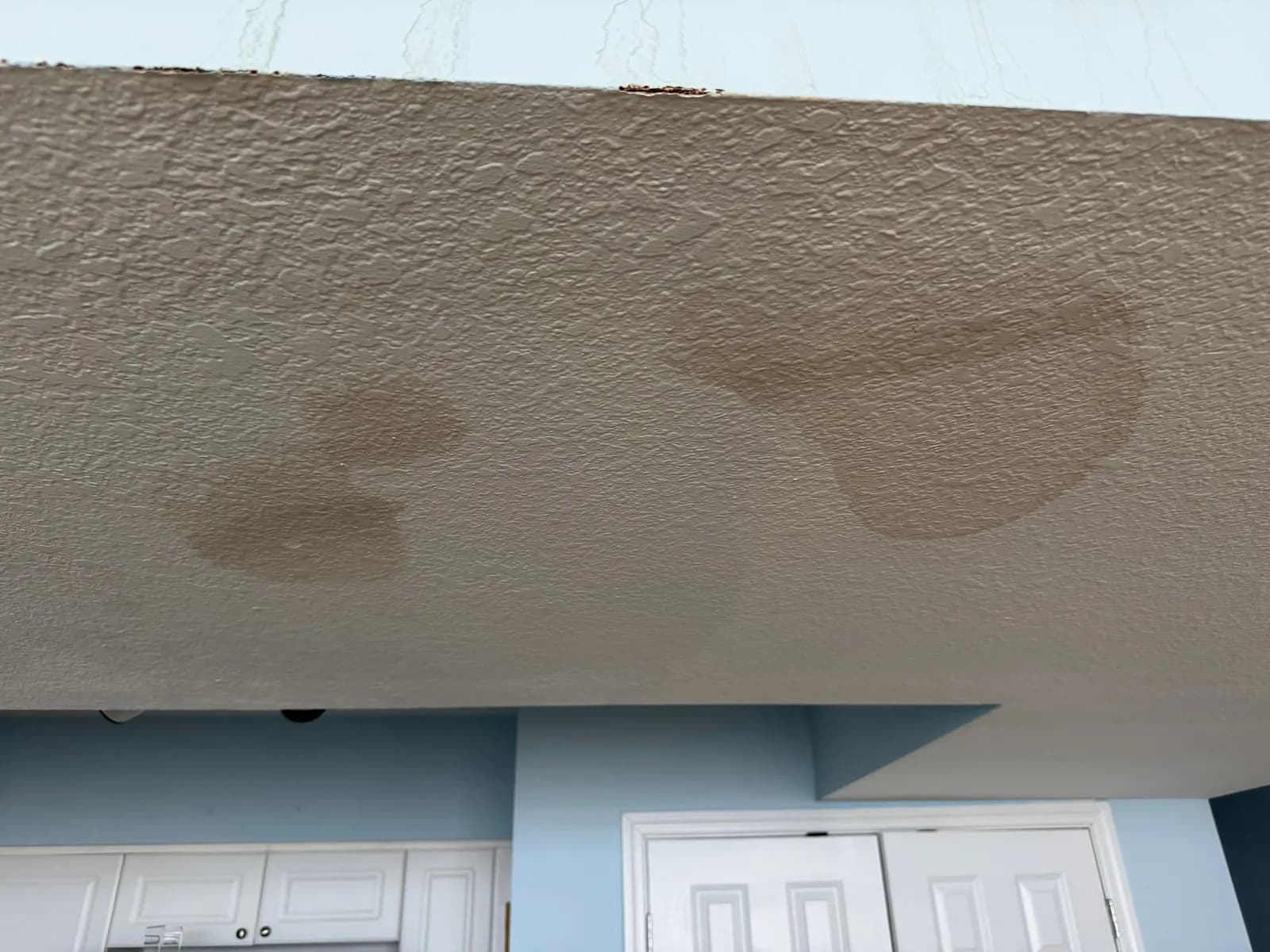
Water stains on the ceiling inside the condo. 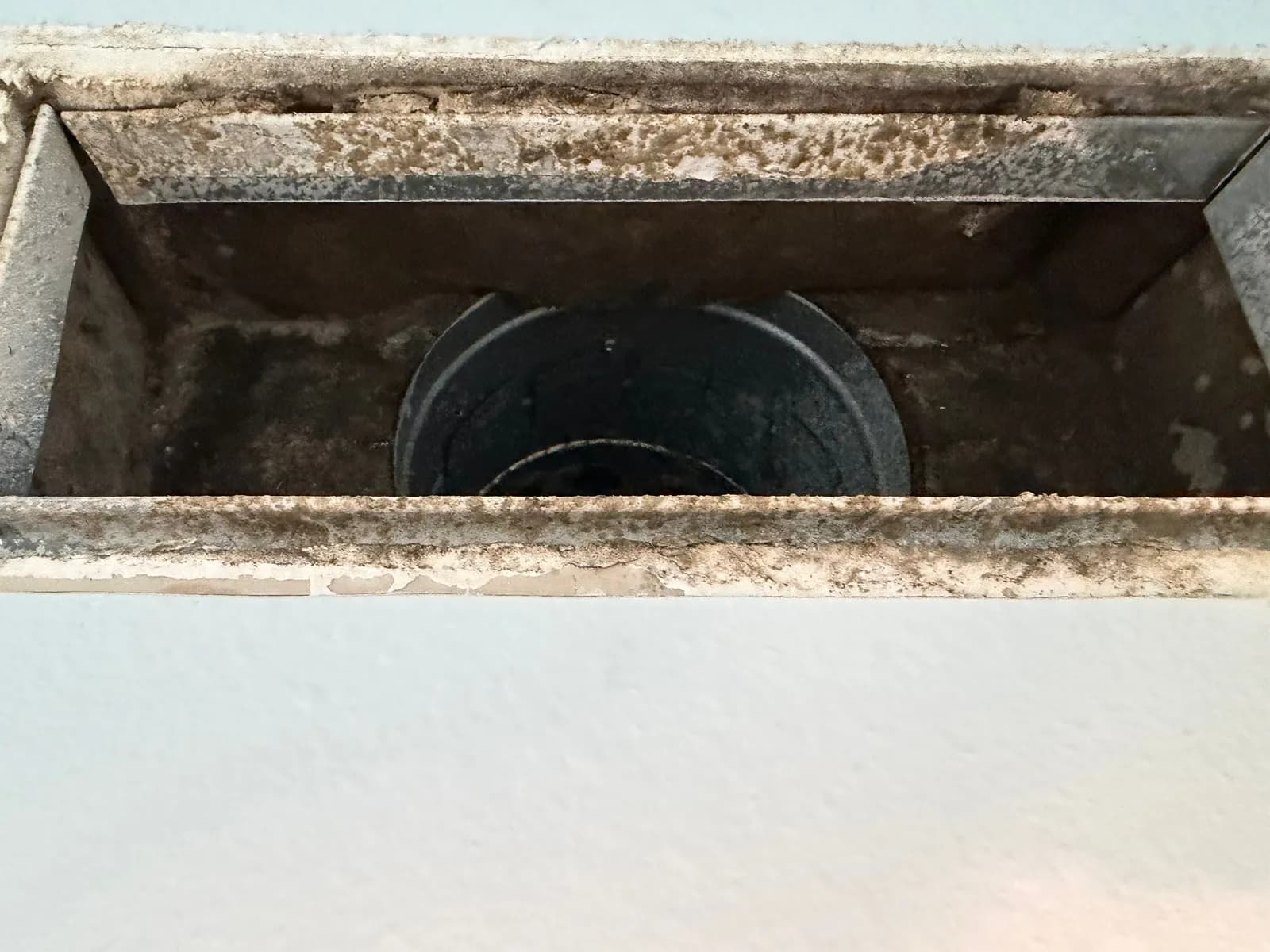
A supply vent with the grille off, showing dark growth around the opening. 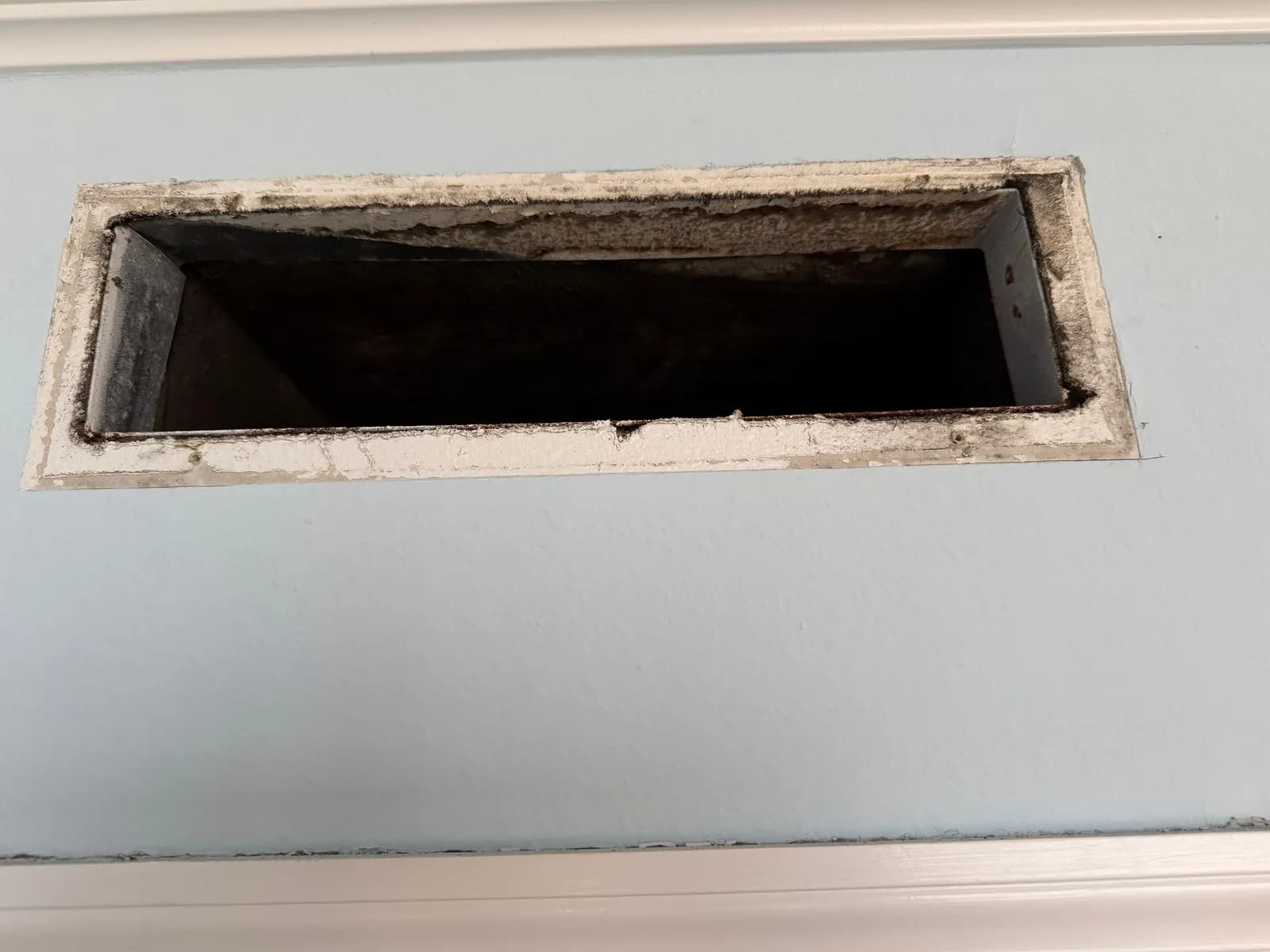
Another vent opening with dark buildup along its edges. 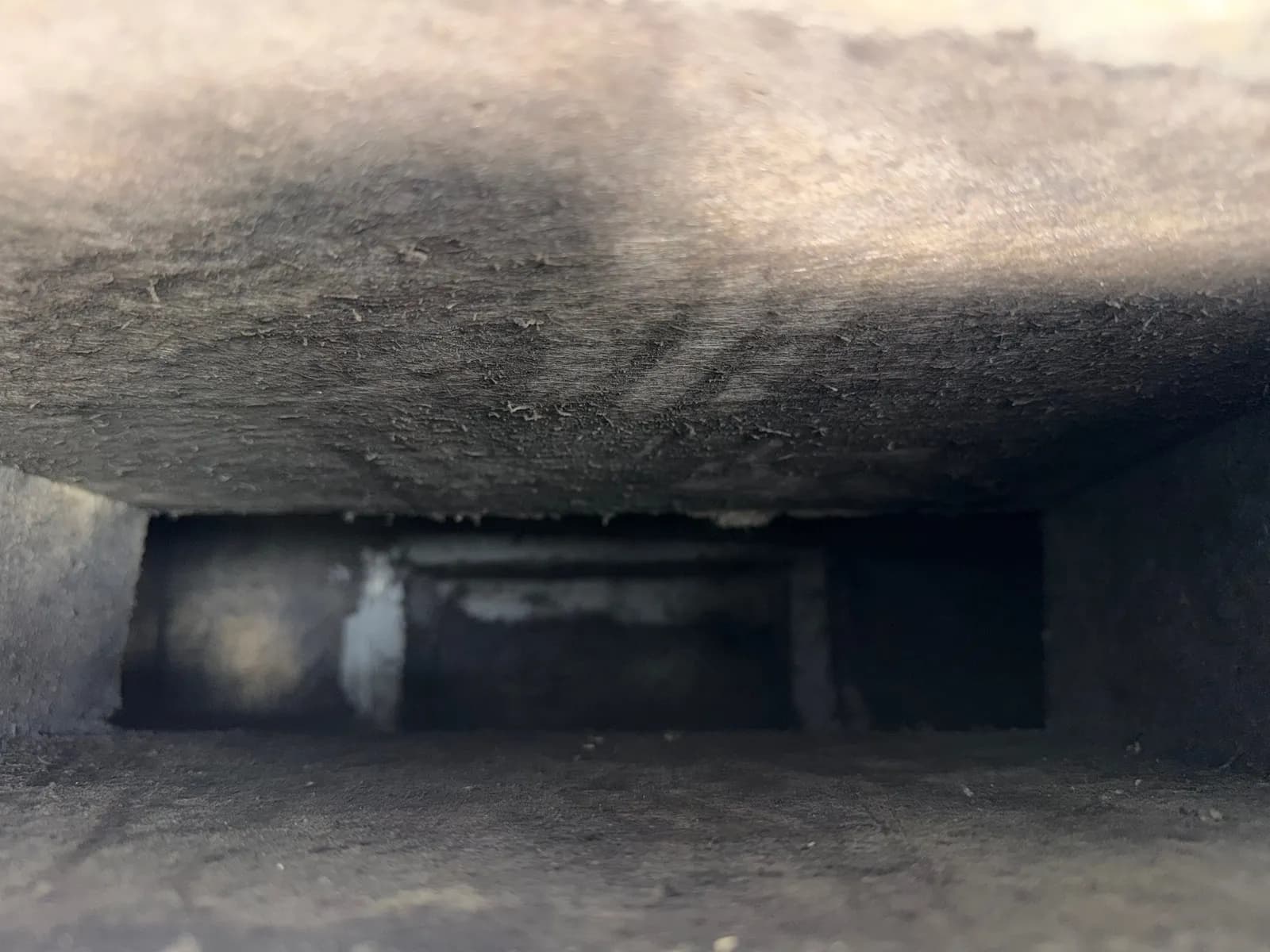
Inside the ductboard, the surface is dusty and stained. 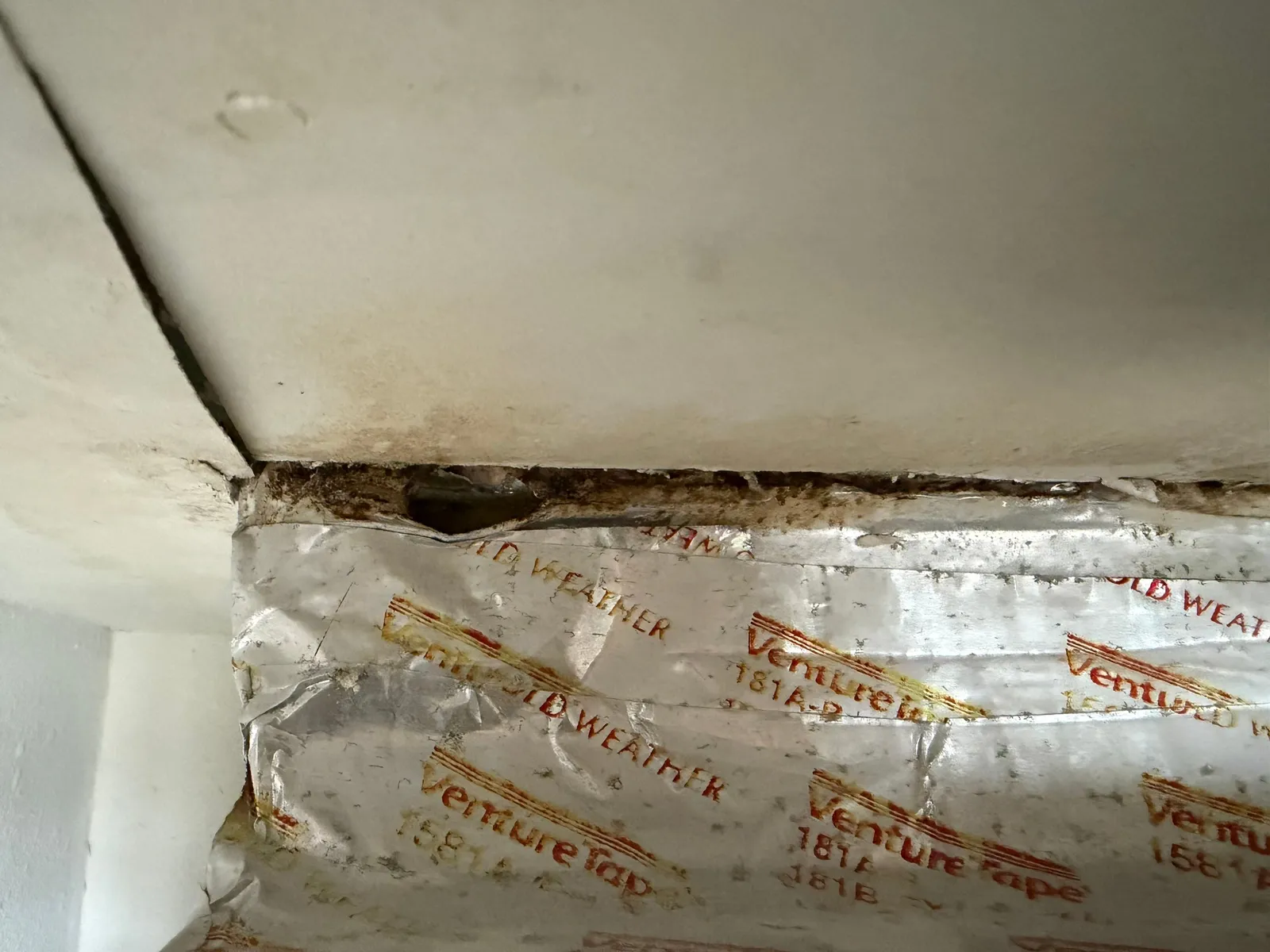
Dark growth along a foil-taped duct seam. 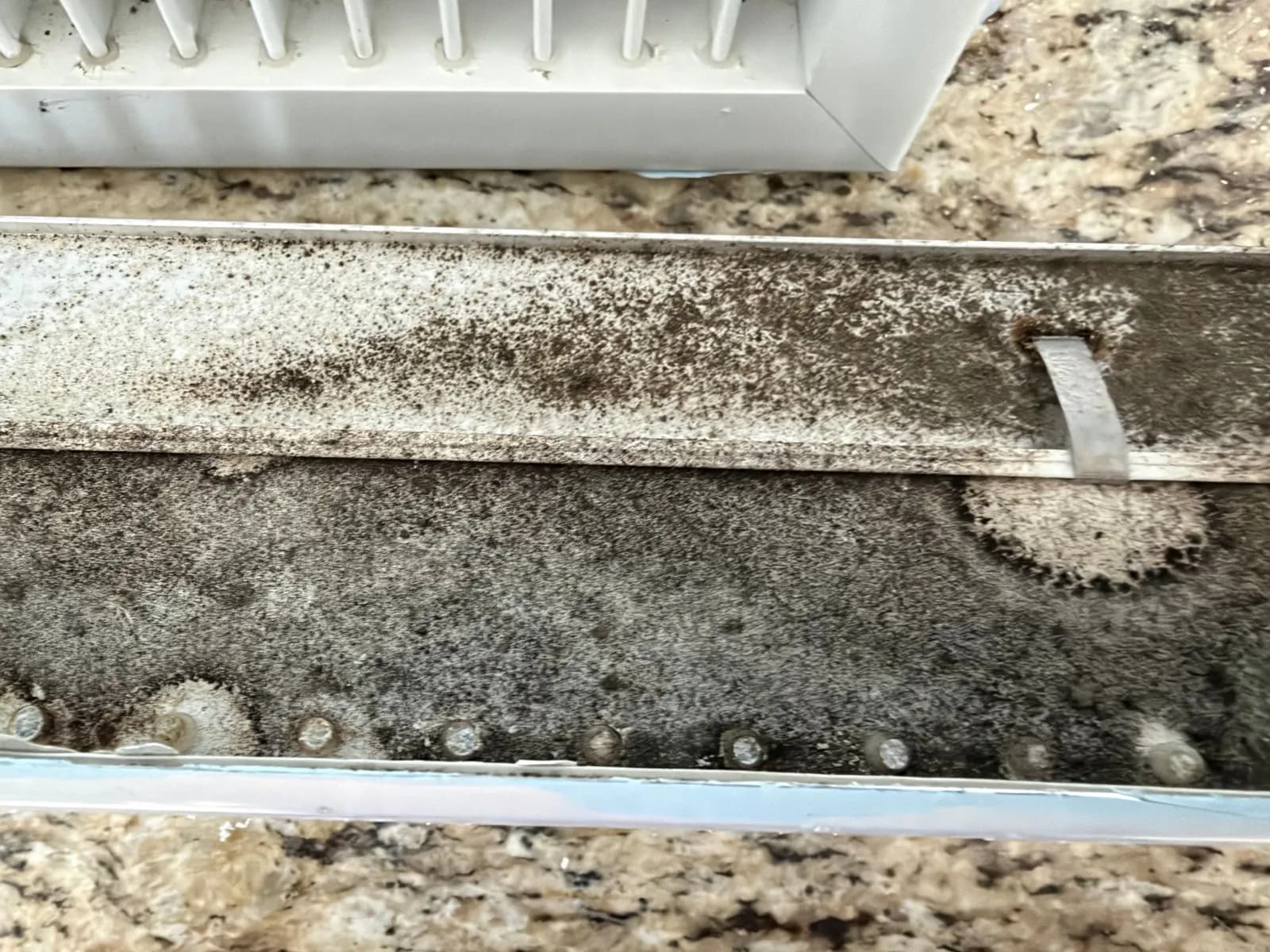
The back of a removed grille, covered in mold growth. 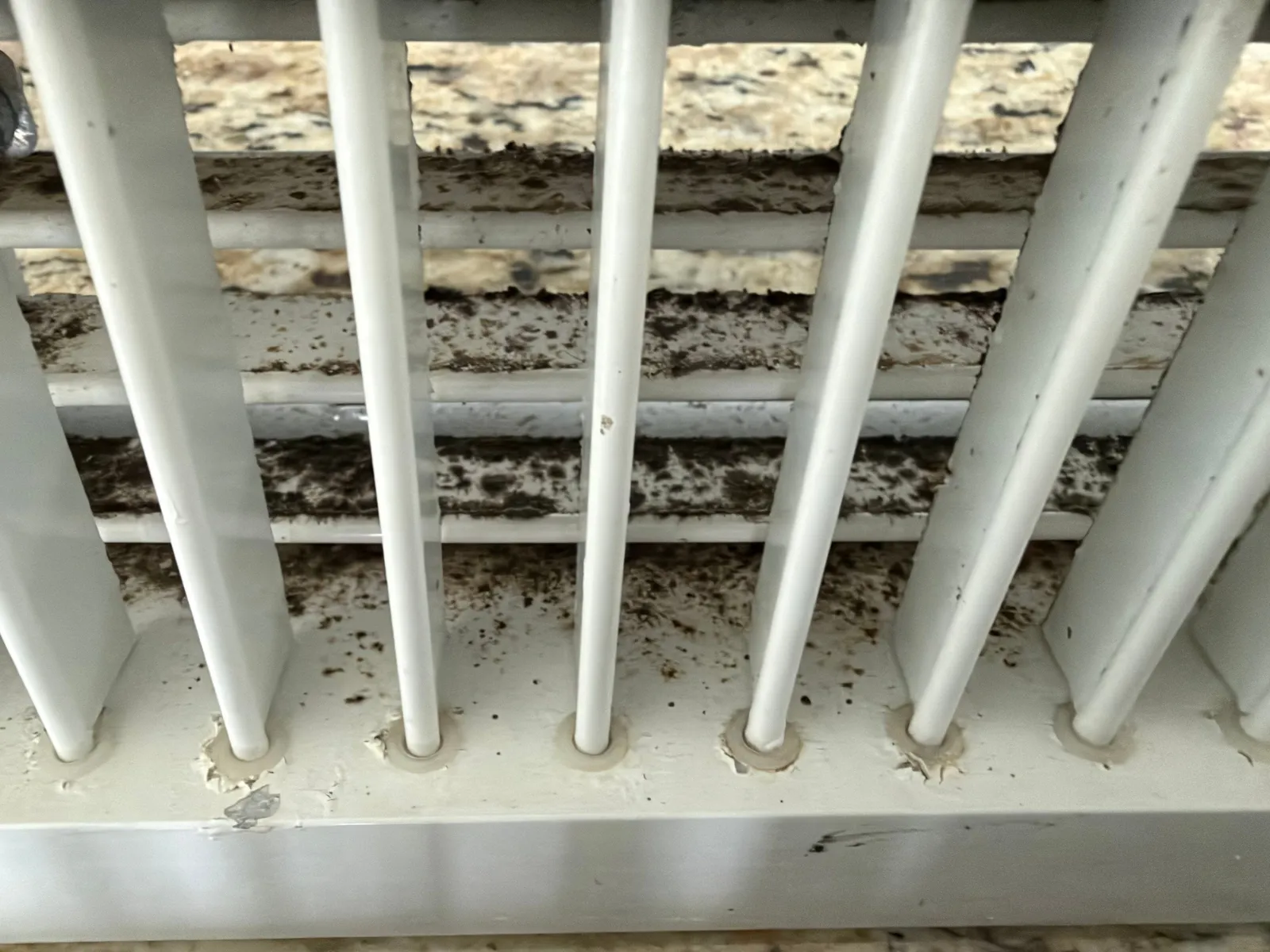
Dark growth between the slats of a vent grille. 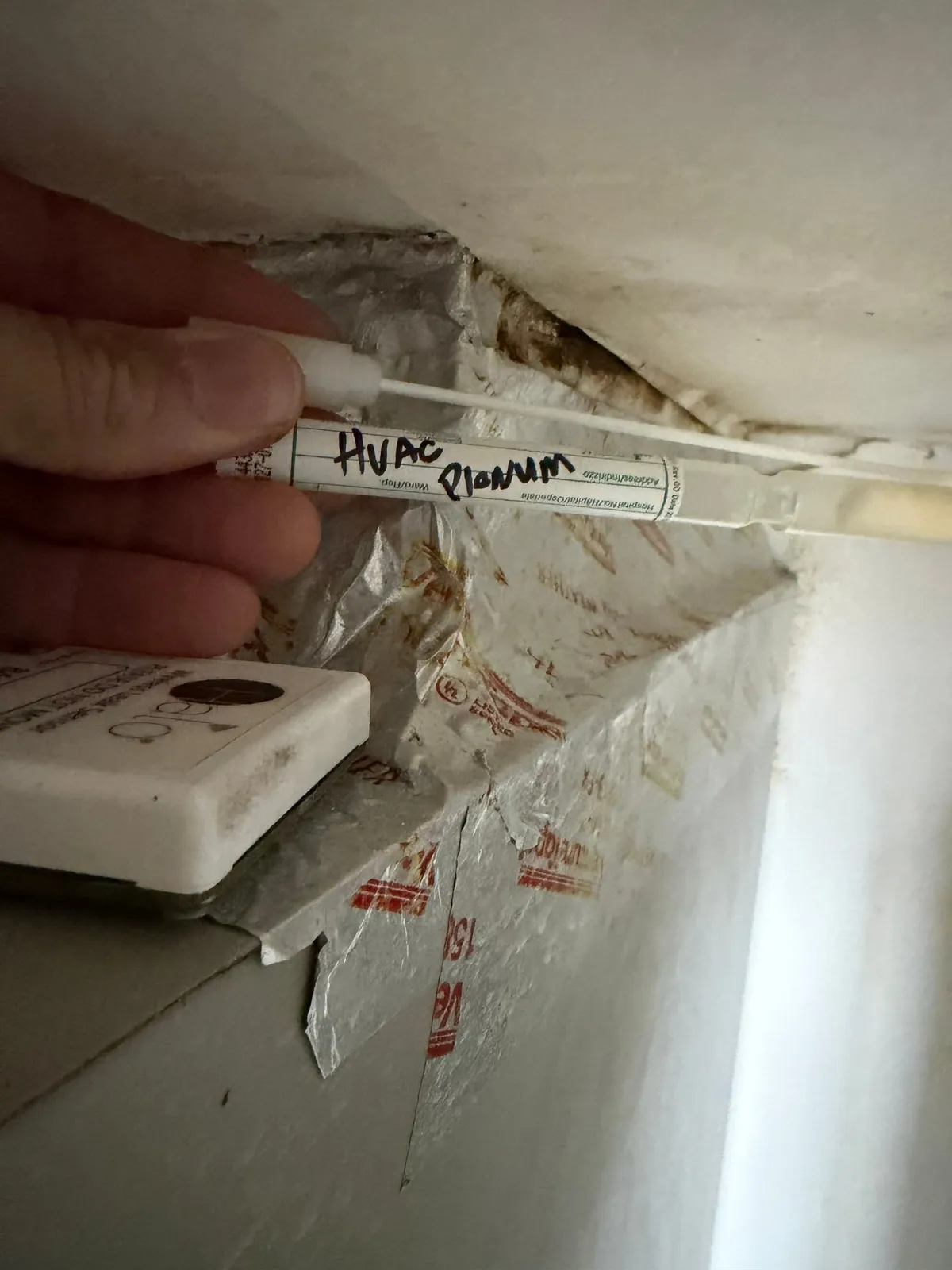
Taking the HVAC plenum swab sample.