
Project story · Mold · Restoration · Pensacola, FL
A Slow Leak Under a Pensacola Kitchen Sink, and What It Left Behind
Mold was found under a kitchen sink in a Pensacola condo. Testing traced it to a long-running sink leak and an overflowing air handler drip pan. This record covers what was found and the remediation plan written for it.
Updated Apr 5, 11:15 AM
- How long the sink leak had likely been active
- 30+ days
- Kitchen bar drywall affected, both sides
- ~88 sq ft
- Living room laminate flooring affected
- ~60 sq ft
- Air handler closet lower drywall affected
- ~44 sq ft
What we found
Mold was found on the floor of the cabinet under the kitchen sink in a one-story condo unit in Pensacola. The bottom panel of that cabinet was sagging and covered in growth.
It went further than the cabinet. Mold was on the drywall behind it, near the garbage disposal outlet. It was also on the bottom of a drawer to the right of the sink. Behind the dishwasher there was only a little growth, which showed the water hadn't spread much past that point.
In the living room, the floor sagged between the kitchen bar and the air handler closet. The laminate on top looked mostly fine. The subfloor underneath had taken on water.
Where the water came from
A licensed mold assessor found two separate sources that overlapped.
The first was a slow plumbing leak under the kitchen sink. Based on the staining and how badly the wood had broken down, the assessor judged that it had been going on for at least 30 days.
The second was the air handler. Its condensate drain line had clogged and the drip pan overflowed. The drywall around the water heater below it was badly damaged and heavily molded. The flow pattern showed the water came from the air handler, not the water heater. Much of that water ran toward the kitchen and pooled under the living room floor, right where the sink leak had also reached.
On the day of the assessment, moisture meter readings showed the kitchen, living room and closet materials were dry. That means both sources had already stopped.
What the testing showed
A tape sample from the kitchen drywall confirmed mold growth. The types found usually grow only where materials stay wet for a long time.
Air samples from the two bedrooms were within normal range. Surface samples from shelves in the guest bathroom, living room and office showed no buildup of settled spores. So the growth was limited to the damaged areas, and the rest of the home didn't need special cleaning.
The plan for the cleanup
The remediation scope written for the kitchen called for sealing off the work area with plastic containment and an airlock. A HEPA-filtered negative air machine would run during the work, along with a dehumidifier.
Inside containment, the dishwasher and double sink would be detached and the lower cabinets removed. The wet drywall and insulation behind them would be torn out and bagged. Every surface would get a detailed HEPA vacuuming, a plant-based antimicrobial, and then a second HEPA pass, since the industry standard calls for at least two.
The assessor's protocol also covered the air handler closet and the living room subfloor. It ends with a post-remediation check before any rebuilding starts.
To be plain about it: this job's record holds the findings and the plan. It doesn't include photos of the finished work, so we're not describing an outcome here.
If this happens at your home
Open your sink cabinet now and then and look at the floor of it. Dark spots, swelling or a soft, sagging panel can mean a slow drip that has been running for a while.
Keep your AC drip pan clean and make sure the drain line is flowing. A clogged line can overflow quietly for months.
If you find mold, try not to disturb it. Having it tested first shows how far it has spread, so the cleanup only removes what it needs to.
From the job file
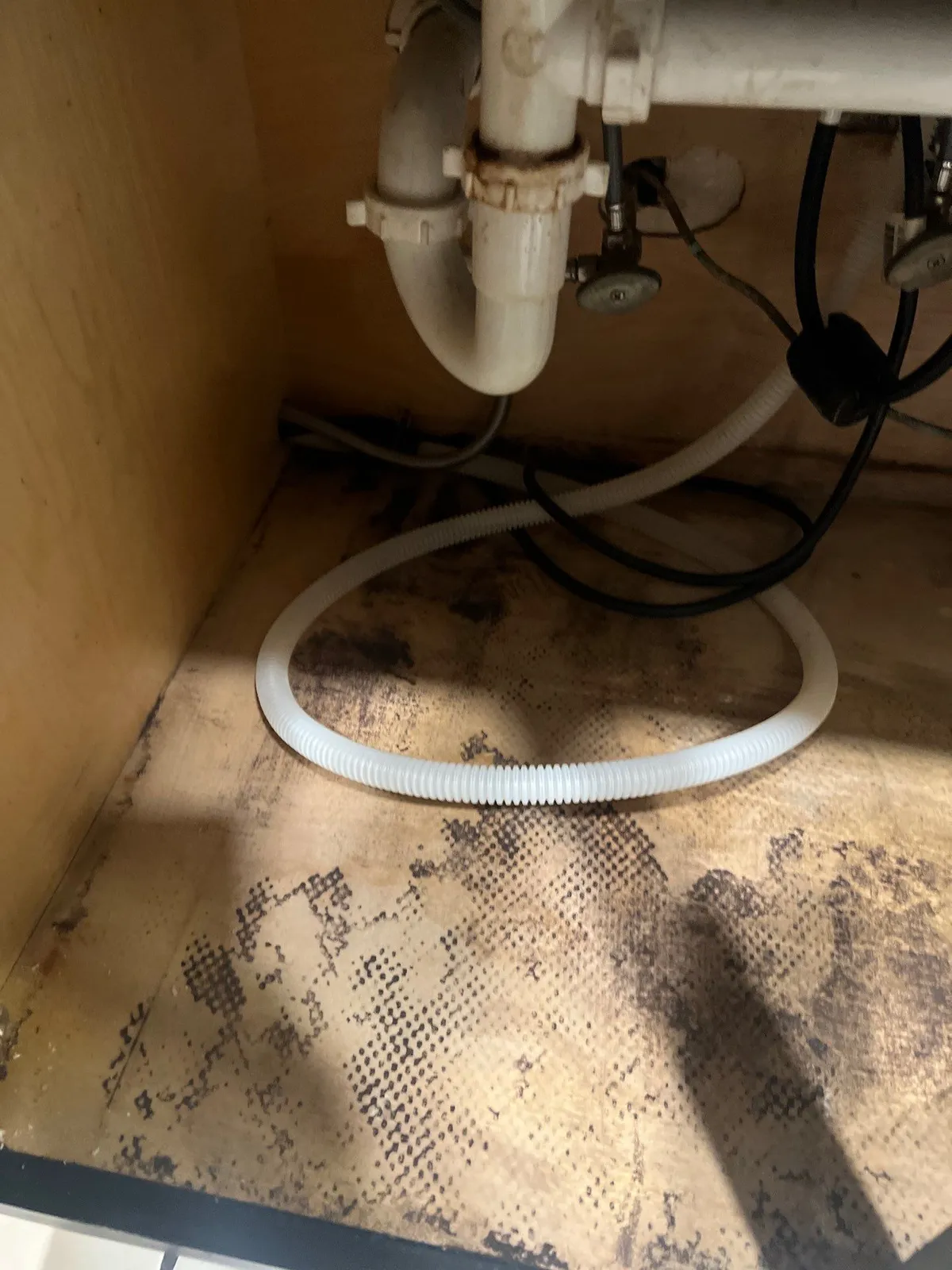
Mold spread across the floor of the kitchen sink cabinet, around the drain pipes and dishwasher hose. 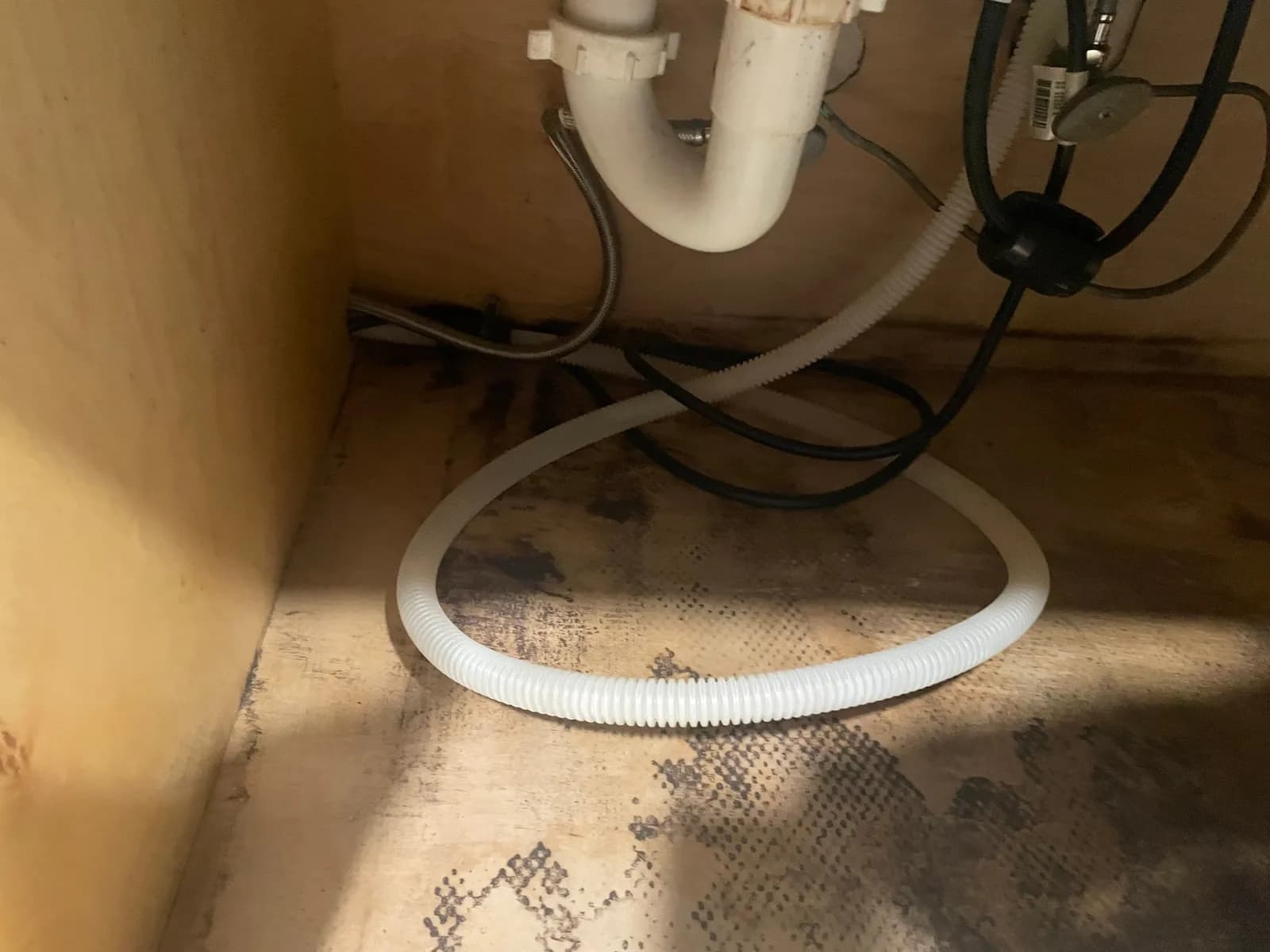
A closer look at the sink cabinet floor, with growth heaviest toward the back wall. 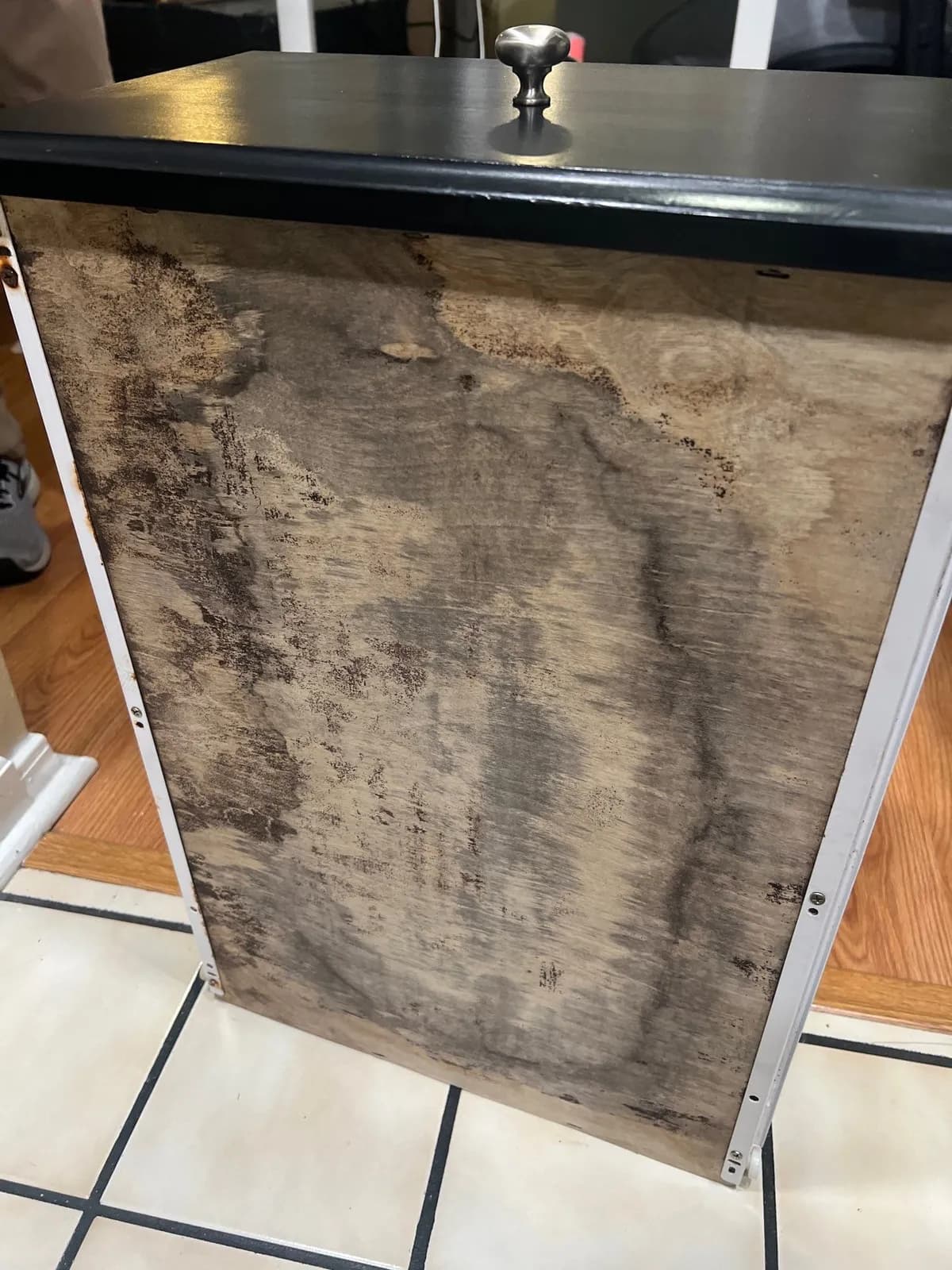
The cabinet's bottom panel, pulled out to show staining and mold across the wood. 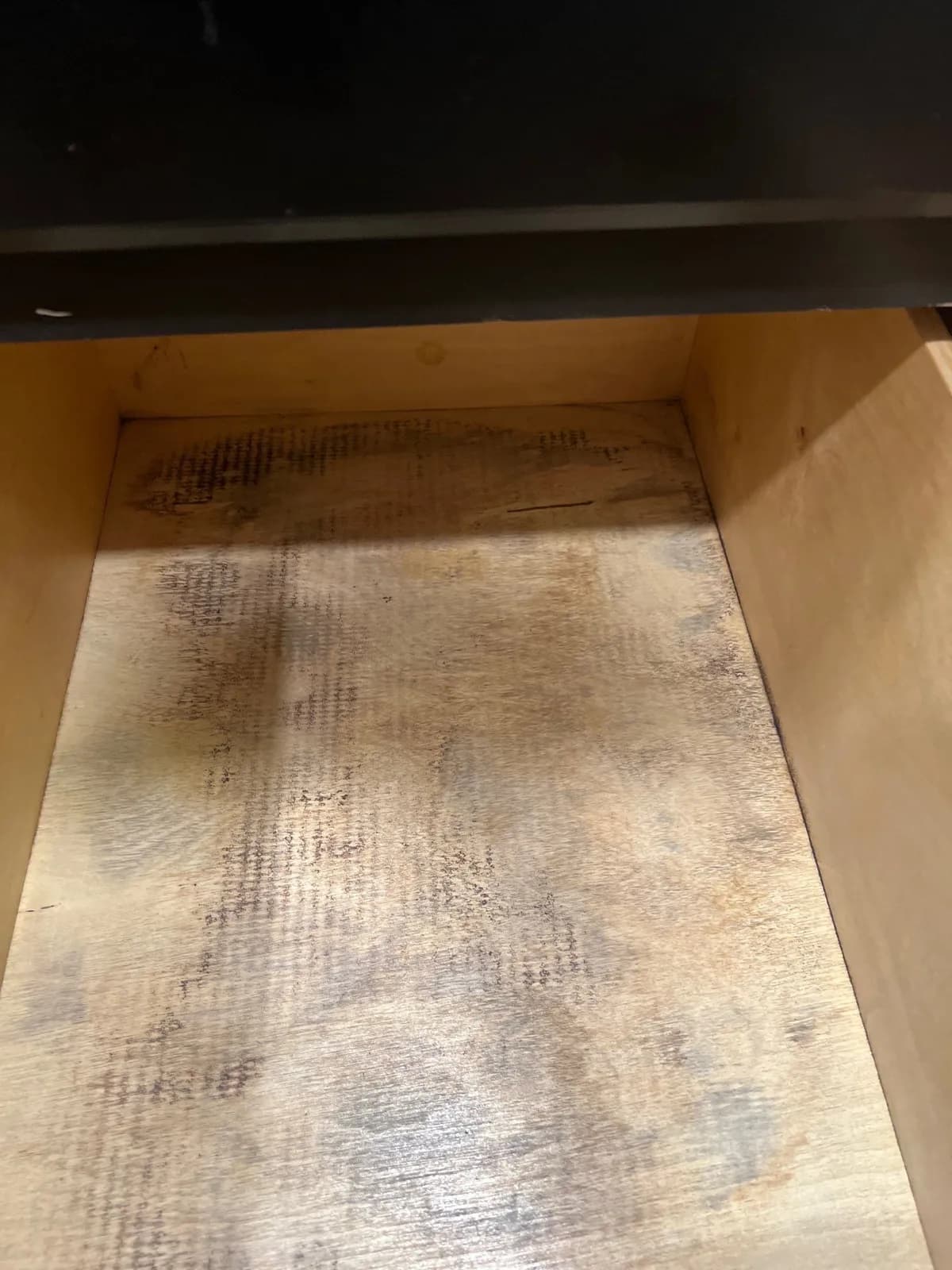
Mold on the bottom of a drawer to the right of the sink. 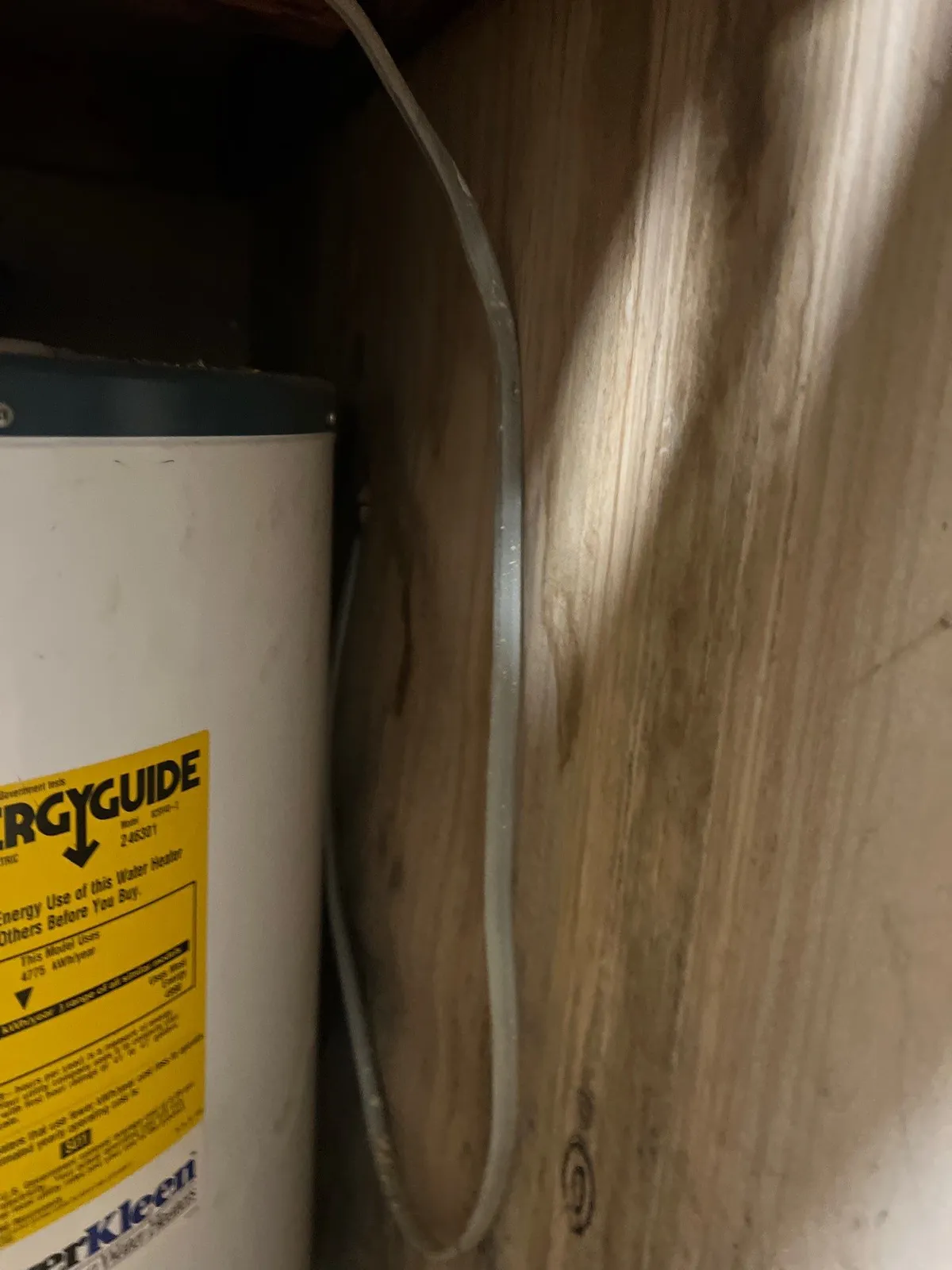
Water-stained drywall next to the water heater, under the air handler. 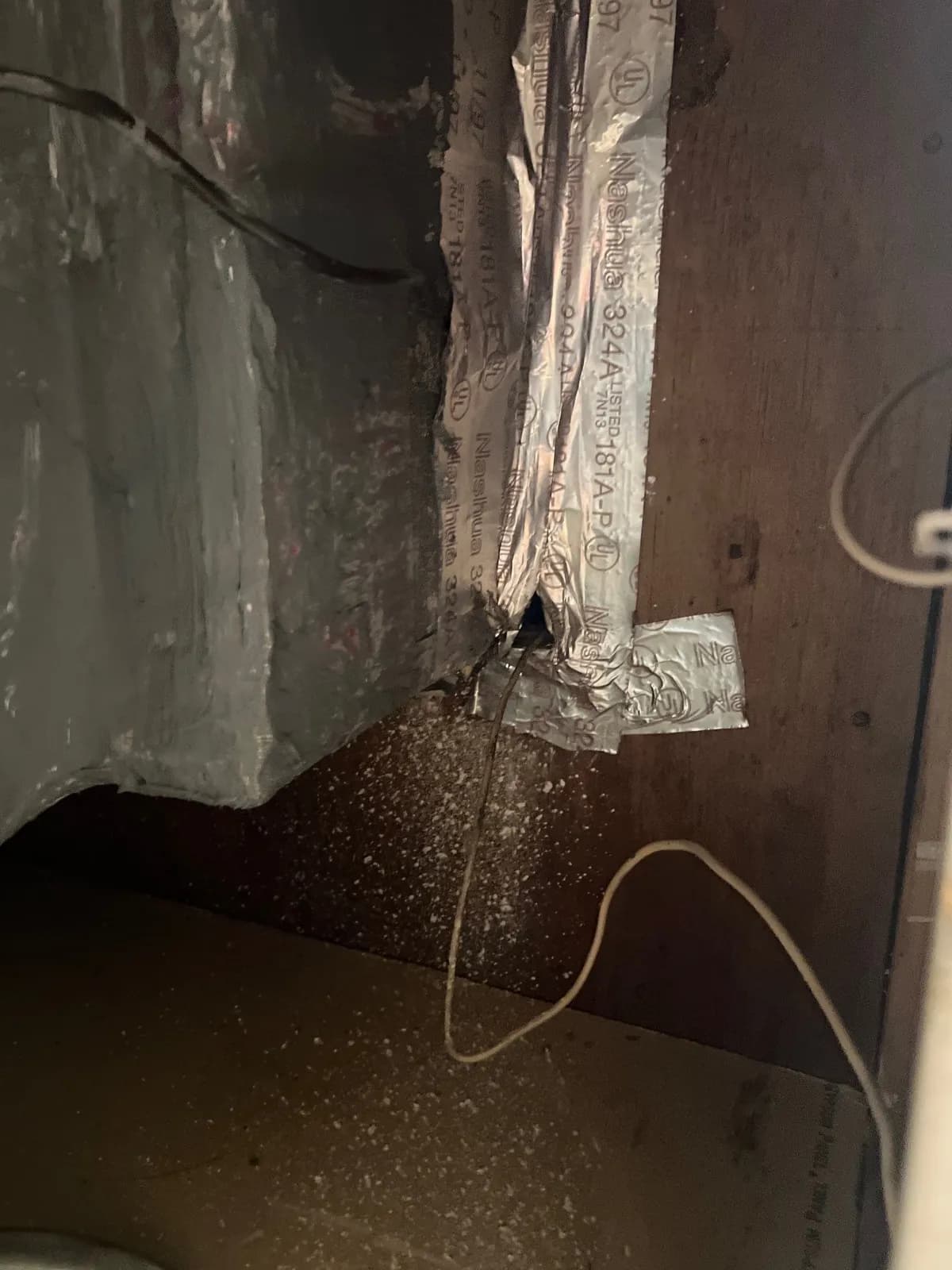
The area around the air handler in the closet, where the drip pan overflowed. 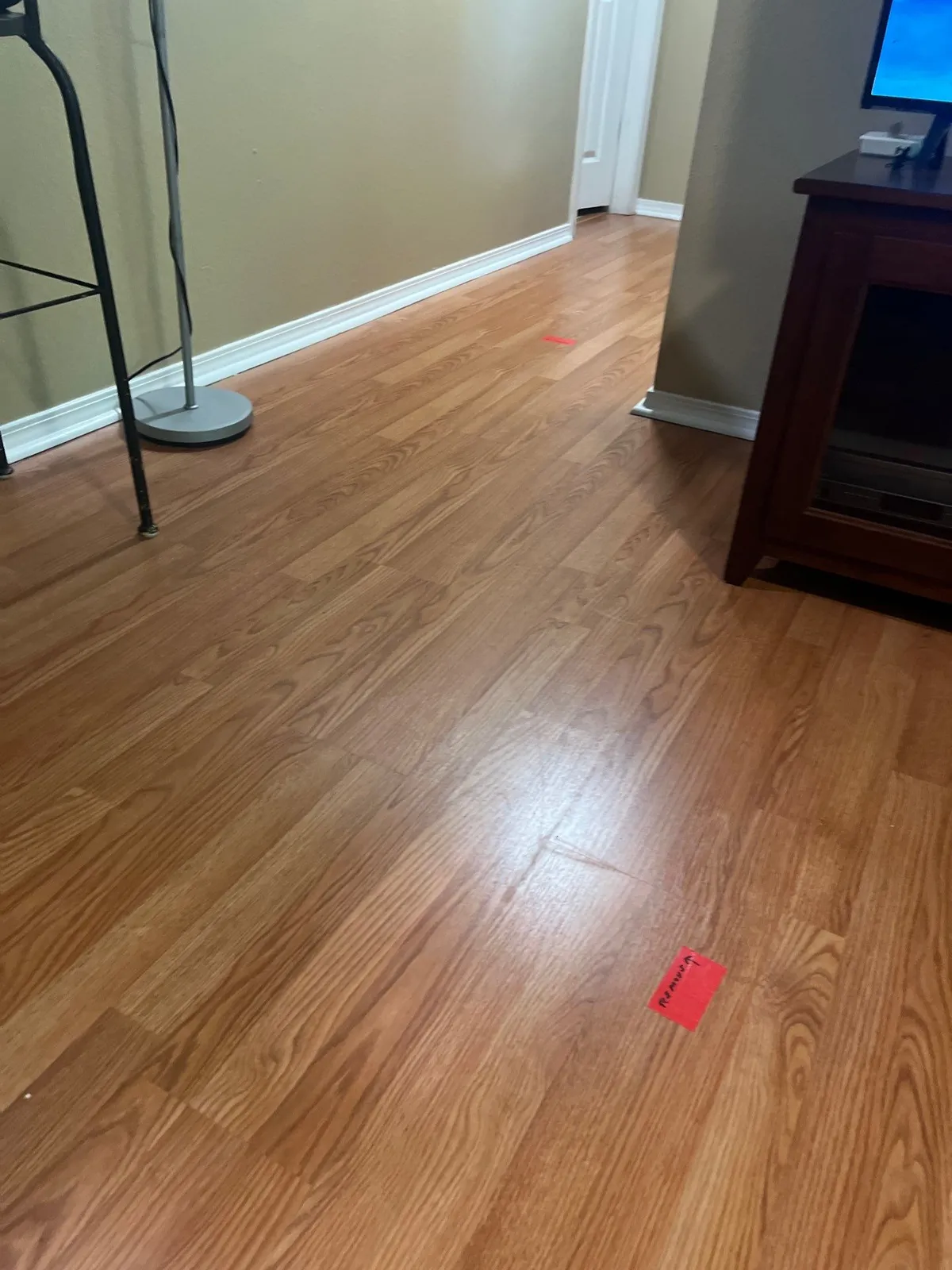
Laminate flooring between the kitchen bar and the hall, where the subfloor underneath sagged. 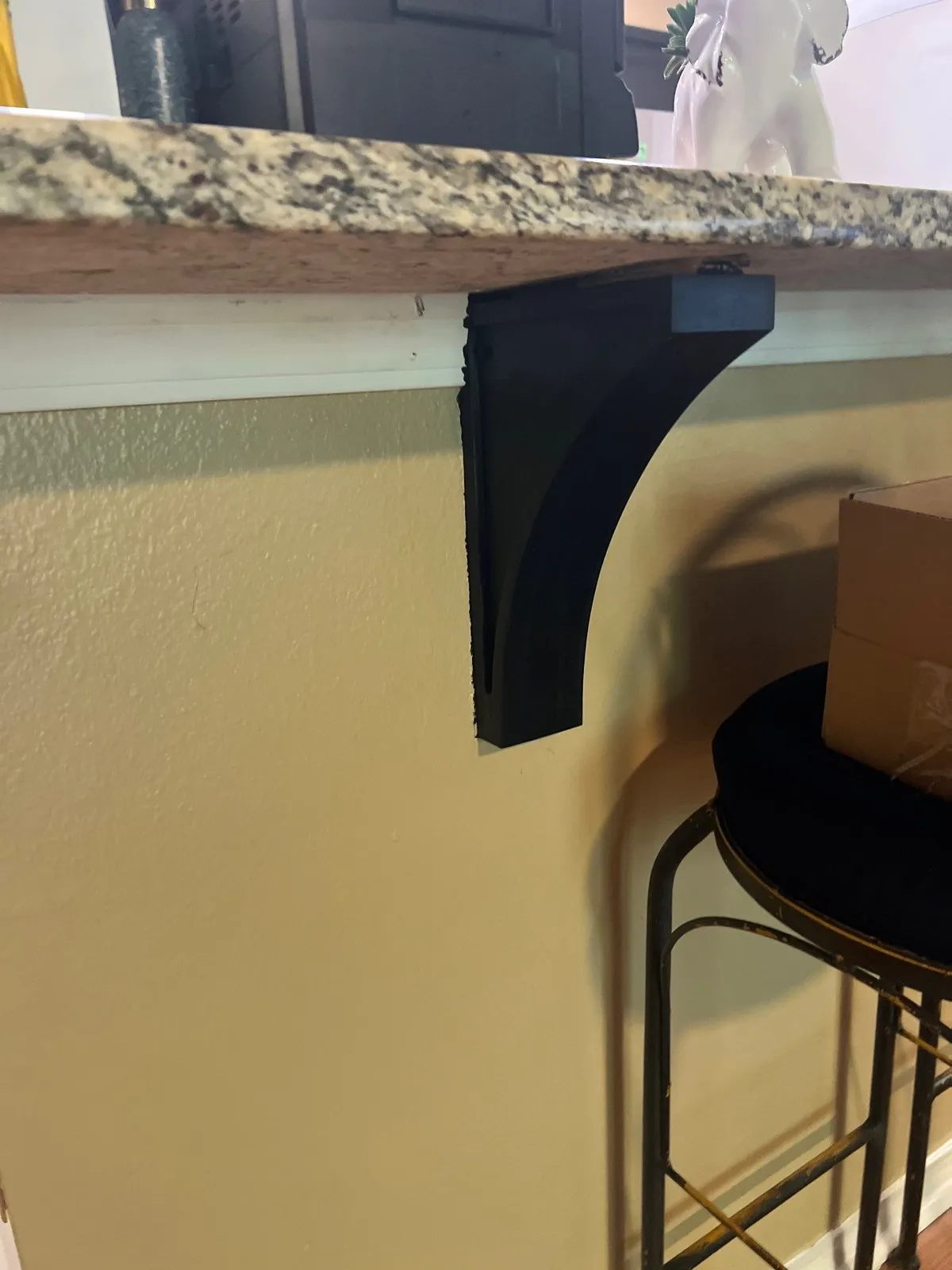
The kitchen bar wall. It looked clean from the living room side, but the drywall behind it was in the affected area.